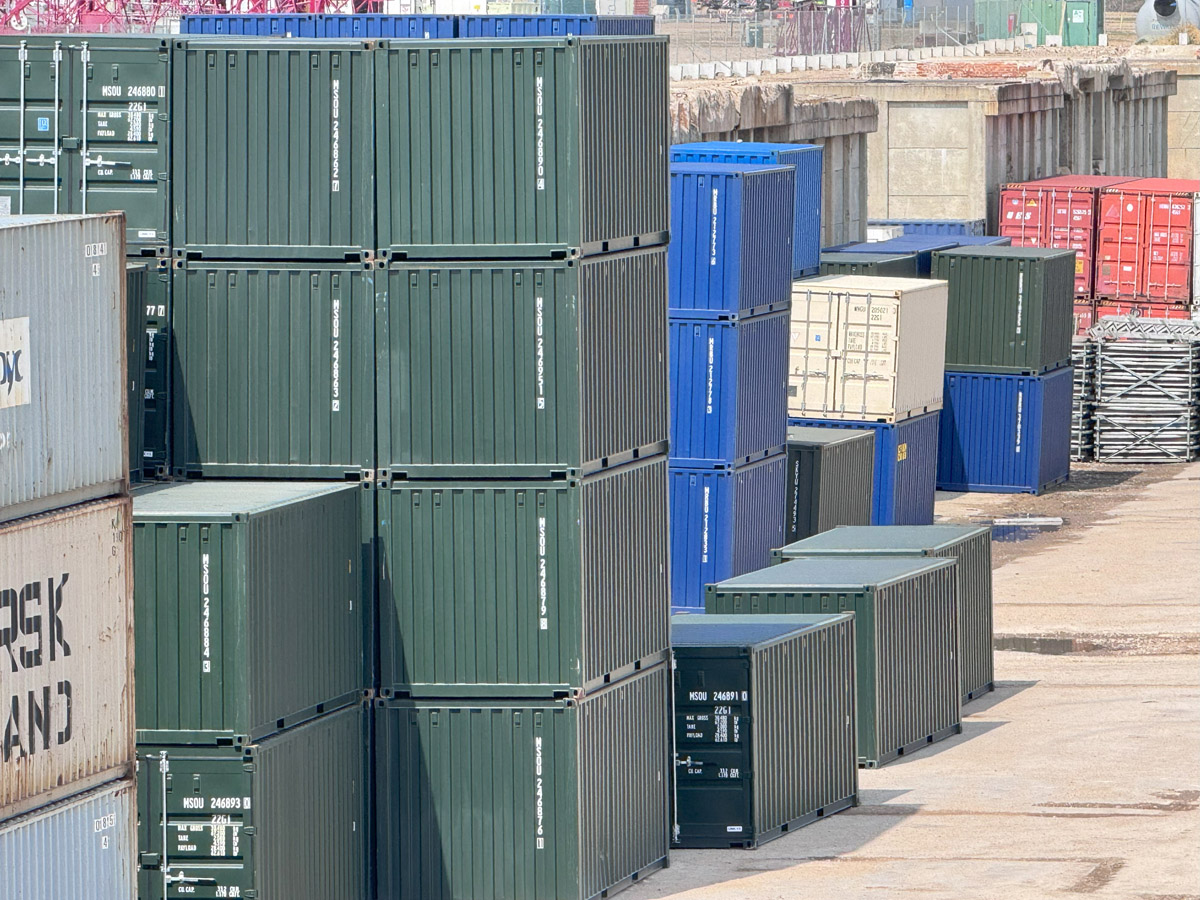
20ft Storage Container
Find your ideal storage solution with 20ft storage containers. Top-quality containers for sale and hire at Shipping Containers of Manchester
A 20ft storage container provides around 33.1m³ of enclosed space for tools, equipment, stock, furniture and other goods that need secure on-site storage. Its combination of capacity and manageable footprint makes it useful for construction sites, businesses, schools, agricultural premises and longer-term storage projects across Manchester.
Shipping Containers of Manchester can supply 20ft containers for purchase or hire. Before choosing a unit, consider how much space you need, how long it will remain on site, the condition required and whether the proposed location is suitable for delivery and placement.

A 20ft unit offers substantially more storage space than a compact container without taking up the length of a 40ft model. That makes it a practical middle ground where storage capacity matters but site space and vehicle access still need careful consideration.
For sites where space is particularly restricted, a 10ft storage container may be easier to accommodate. Where substantially more capacity is required, and access allows, compare the available site space with a 40ft storage container.

The 20ft containers described here use Cor-Ten steel construction with full-width double cargo doors. A lock box provides steel protection around the padlock area, making direct access to the lock more difficult.
The supplied specification also includes a 28mm marine plywood floor supported by steel cross-members. Multiple vents allow some air movement through the container. Ventilation can help manage the internal environment, but it does not mean condensation cannot occur.
Condensation develops when moisture in the air meets colder steel surfaces. The risk can increase when damp goods are stored, the doors are opened frequently in wet conditions, or there are substantial changes in temperature. Keeping stored goods dry before loading, maintaining ventilation and considering lining or insulation for sensitive contents can help manage the problem.
Security also depends on how the container is used. Choose a suitable padlock, control access to keys, and avoid obstructing the doors so that they cannot close correctly. The container security guide covers further points for protecting a unit and its contents.

The dimensions and capacity below are the specifications supplied for this standard 20ft container. Individual units and container types can differ, so measurements should be confirmed where the container must fit a restricted site or the stored equipment has tight clearance requirements.
| Feature | Imperial measurements | Metric measurements |
|---|---|---|
| External dimensions, L × W × H | 20' × 8' × 8'6" | 6.058 × 2.438 × 2.591m |
| Internal volume | 1,170 cubic feet | 33.1m³ |
| Maximum payload | 62,016 lb | 28,120kg |
| Door opening width | 7' 8 1/8" | 2.340m |
| Door opening height | 7' 5 1/2" | 2.274m |
The quoted maximum payload is a container specification rather than a recommendation for a particular storage site. The ground, loading method and any transport operation also need to be suitable for the weight involved.
Buying can make sense where the container is expected to remain in use for a long period or where ownership is useful for future relocation or modification. A purchased container can also be adapted for a particular use, provided the proposed alterations are suitable for the unit, and any relevant site requirements are addressed.
Hire can be more appropriate for temporary building work, additional business storage, refurbishment projects or other situations where the container is only required for a defined period. Before modifying a hired unit, check what the hire agreement permits.
Responsibility for damage, cleaning and the condition required when a hired container is collected should also be understood before use. If shelving, electrical work, lining or other changes are being considered, establish whether they are appropriate before work starts rather than assuming a hired container can be altered freely.
Used and one-trip containers can differ in appearance, age, repairs and previous service. Condition descriptions help compare units but should not be treated as guarantees of identical condition. The shipping container grades guide explains the main terms used when assessing container condition.

Delivering a 20ft container involves more than checking that there is enough ground space for the unit itself. The delivery vehicle also needs a suitable route into the site and sufficient room to manoeuvre and unload.
Crane-equipped vehicles can be used for container placement. HIAB refers to a lorry-mounted loading crane commonly used to lift containers from the delivery vehicle into position. The achievable placement depends on the vehicle position, crane reach and the obstacles around the lifting area.
Check gate widths, bends, parked vehicles and other restrictions along the access route. Overhead cables, trees, building projections and similar obstructions also need to be considered before delivery. Restricted access does not automatically prevent placement, but accurate site information is needed to assess what can be done safely.
Agree on the door orientation before the container is unloaded. Leaving enough clear space in front of the cargo doors is essential if they are to open fully and goods are to be moved in and out easily.
A container should be positioned on firm, suitable and reasonably level support. Uneven settlement can twist the container enough to affect door operation, while poor drainage can leave the area around the base persistently wet.
The correct preparation depends on the site and intended use. It is better to deal with soft ground, drainage and level differences before delivery than to discover after placement that the doors are difficult to operate or the container needs to be lifted again.
The container ground preparation guide covers the main considerations for preparing a storage site.
Future collection should be considered at the same time. New fencing, parked machinery, building materials or other changes around the container can prevent a delivery vehicle reaching the unit later, particularly where a hired container will eventually need to be removed.

Planning requirements can vary according to how a container is used, how long it remains on site and the circumstances of the property. Visibility, neighbours, listed status, conservation areas, change of use, site status and local planning policy can all be relevant.
A container should not be assumed either to require planning permission in every situation or to be exempt in every situation. This becomes particularly relevant where a unit will remain in place for a prolonged period or is being converted for a different use.
For sites in Manchester, check the current requirements with the relevant council before relying on general guidance. The Manchester container planning guide provides useful background on factors that may need consideration.
Start with the contents you intend to store and the usable space available on the site. Check the external dimensions, door opening and internal capacity against your requirements, then consider delivery access and the room needed to use the doors after placement.
Condition should reflect the intended use. Cosmetic wear may be acceptable for general site storage, while appearance may matter more at a school, customer-facing business or other visible location. Any proposed lining, shelving, electrical installation or other modification should also be discussed before choosing a container.
You can compare other sizes and specialist designs through the shipping container range. For help with purchase or hire, required condition and site access, contact Shipping Containers of Manchester with details of the proposed location and how the container will be used.
Monday : 9:00-17:30
Tuesday : 9:00-17:30
Wednesday : 9:00-17:30
Thursday : 9:00-17:30
Friday : 9:00-17:30
Saturday : Closed
Sunday : Closed
Tel: 0330 0130 636